Published Date: 29.04.2026

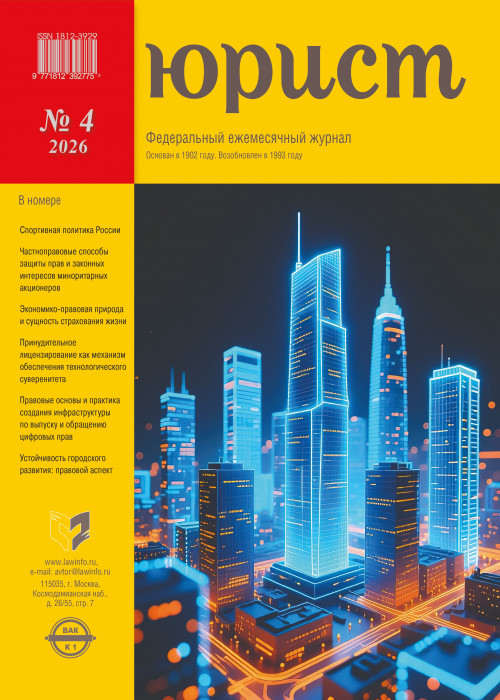
Compulsory Licensing as a Mechanism for Ensuring the Technological Sovereignty of the Russian Federation

Annotation

The paper is devoted to the analysis of the institution of compulsory licensing. It has been established that the refusal of foreign copyright holders to conclude and execute licensing agreements with Russian companies creates a critical shortage of access to technologies and equipment necessary to ensure national technological sovereignty. It is determined that the grounds existing in Russian legislation for the use of patent law objects without the consent of the copyright holder do not cover situations of unilateral renunciation of contractual relations. It is concluded that it is necessary to expand the grounds for issuing a compulsory license by supplementing the Civil Code of the Russian Federation with a provision allowing Russian persons to apply to the court for a compulsory license in respect of intellectual property owned by copyright holders from unfriendly countries in the event of their unilateral refusal to conclude or execute a license agreement, leading to an insufficient supply of goods on the market.


Library

1. Антропов В.В. Параллельный импорт в системе российской внешней торговли в 2025 году / В.В. Антропов // Экономика. Налоги. Право. 2025. Т. 18. № 1. С. 53–62. DOI: 10.26794/1999-849X-2025-18-1-53-62. EDN: DSASIR.
2. Безсмертная Е.Р. Российские инициативы в области устойчивого развития агломераций и территорий: работа над ошибками ESG / Е.Р. Безсмертная // Экономика. Налоги. Право. 2025. Т. 18. № 5. С. 60–68. DOI: 10.26794/1999-849X-2025-18-5-60-68. EDN: PDEXDS.
3. Киселев А.С. Возможности правового нивелирования политических и организационно-управленческих рисков применения искусственного интеллекта / А.С. Киселев // Вестник Российского университета дружбы народов. Серия: Юридические науки. 2025. Т. 29. № 2. С. 524
4. Музалев С.В. Совершенствование системы критериев оценки результативности промышленной политики России в условиях санкционного давления / С.В. Музалев, Н.М. Абдикеев, Л.В. Оболенская // Финансы: теория и практика. 2025. Т. 29. № 4. С. 6–18. DOI: 10.26794/2
5. Фаттахов Р.В. Проблемы обеспечения сбалансированного социально-экономического развития регионов в условиях санкций / Р.В. Фаттахов, М.М. Низамутдинов, П.А. Иванов // Финансы: теория и практика. 2025. Т. 29. № 2. С. 166–180. DOI: 10.26794/2587-5671-2025-29
6. Федотова М.А. Оценка тенденций и перспектив развития экономики России в условиях санкционного давления / М.А. Федотова, Т.В. Погодина, С.B. Карпова // Финансы: теория и практика. 2025. Т. 29. № 1. С. 6–19. DOI: 10.26794/2587-5671-2025-29-1-6-19. EDN: OKVR
7. Щурина С.В. Государственное регулирование рынка цифровых активов: подходы и практика / С.В. Щурина // Экономика. Налоги. Право. 2025. Т. 18. № 5. С. 154–164. DOI: 10.26794/1999-849X-2025-18-5-154-164. EDN: SGHCTT.
8. DeRoo P. Public Non-Commercial Use Compulsory Licensing for Pharmaceutical Drugs in Government Health Care Programs / P. DeRoo // Michigan Journal of International Law. 2011. Vol. 32. Iss. 2. P. 351.
9. Vawda Y.A. Compulsory Licensing Jurisprudence in South Africa: Do We Have Our Priorities Right? / Y.A. Vawda // Research Paper. 2018. Iss. 90. P. 1–37.

Other articles